AI visual system for a new social media company.
An explainer series on the systems behind the world's biggest news needed visuals for things like supply chokepoints and the hidden systems under a phone. I built a visual language, creative pipeline and prompting rules to run as standalone as possible.
Creative, prompt engineer, app development
Z-Image, Qwen Image Edit, Kling, Seedance, Premiere, Next.js
In progress
The challenge: High level concepts that need quick visual translation, artistry and consistency.
Meaning first. Style last.
Every frame got tested as plain white models before any style touched it.
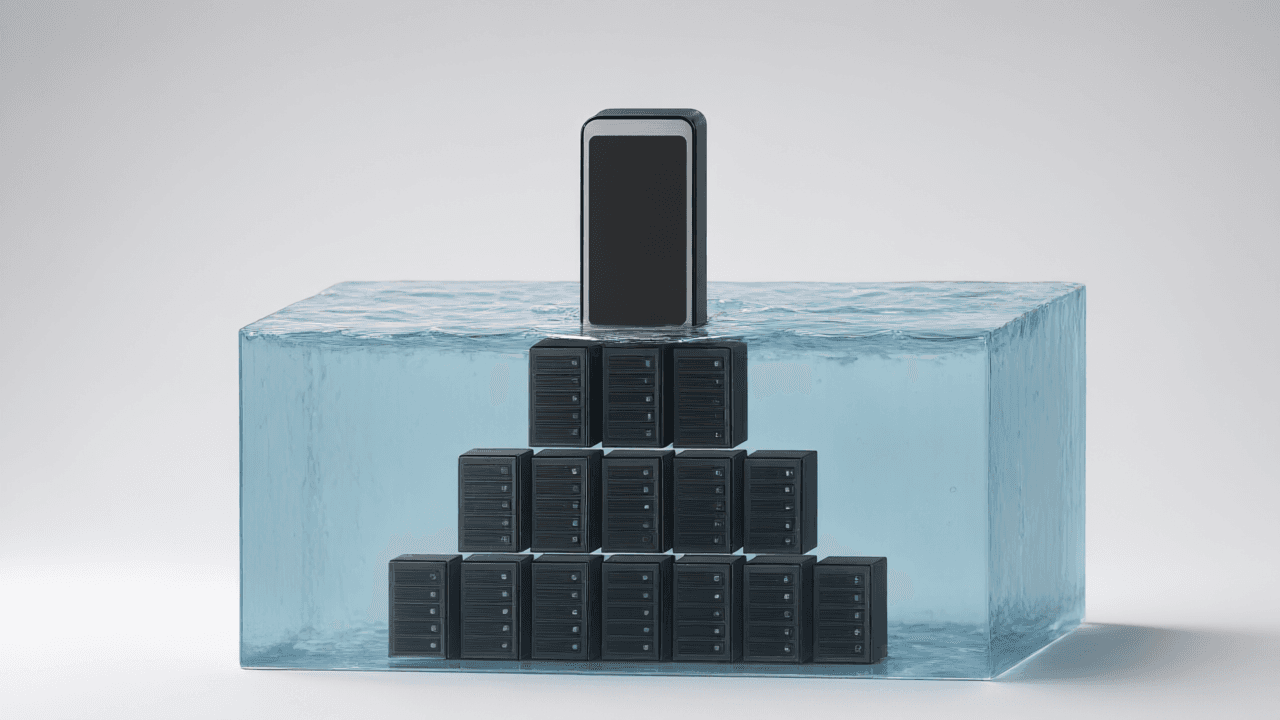
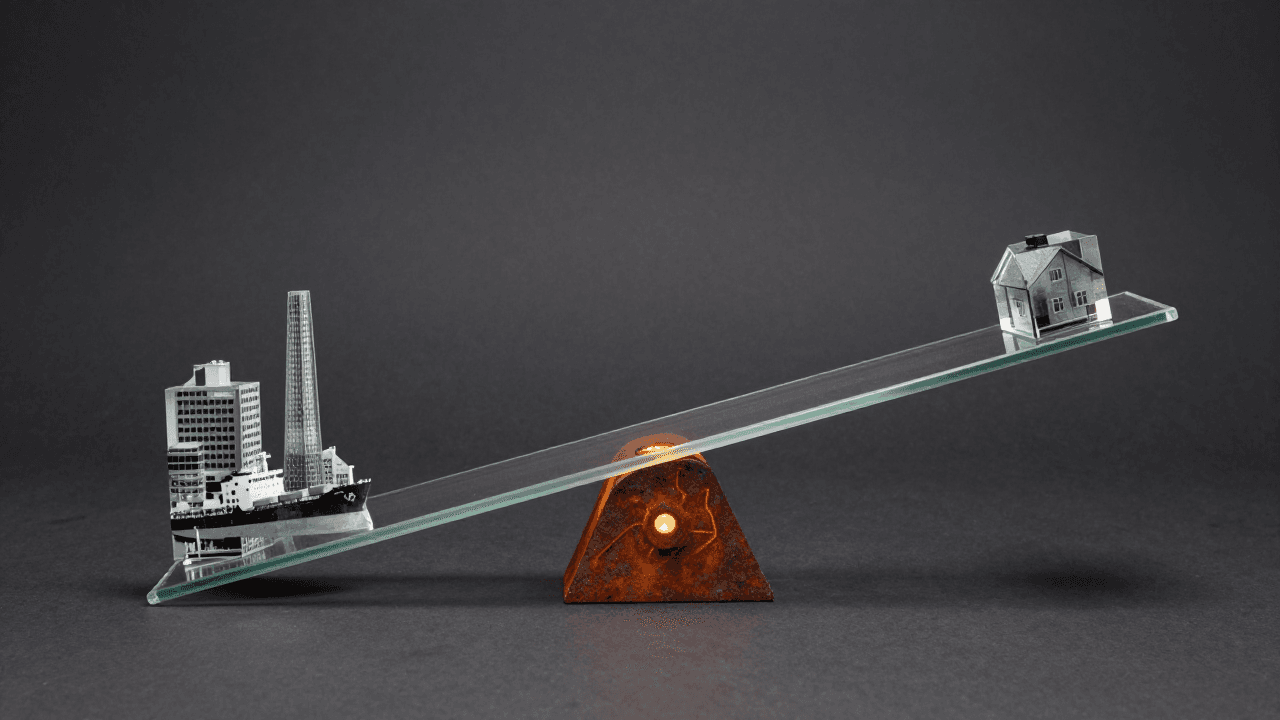
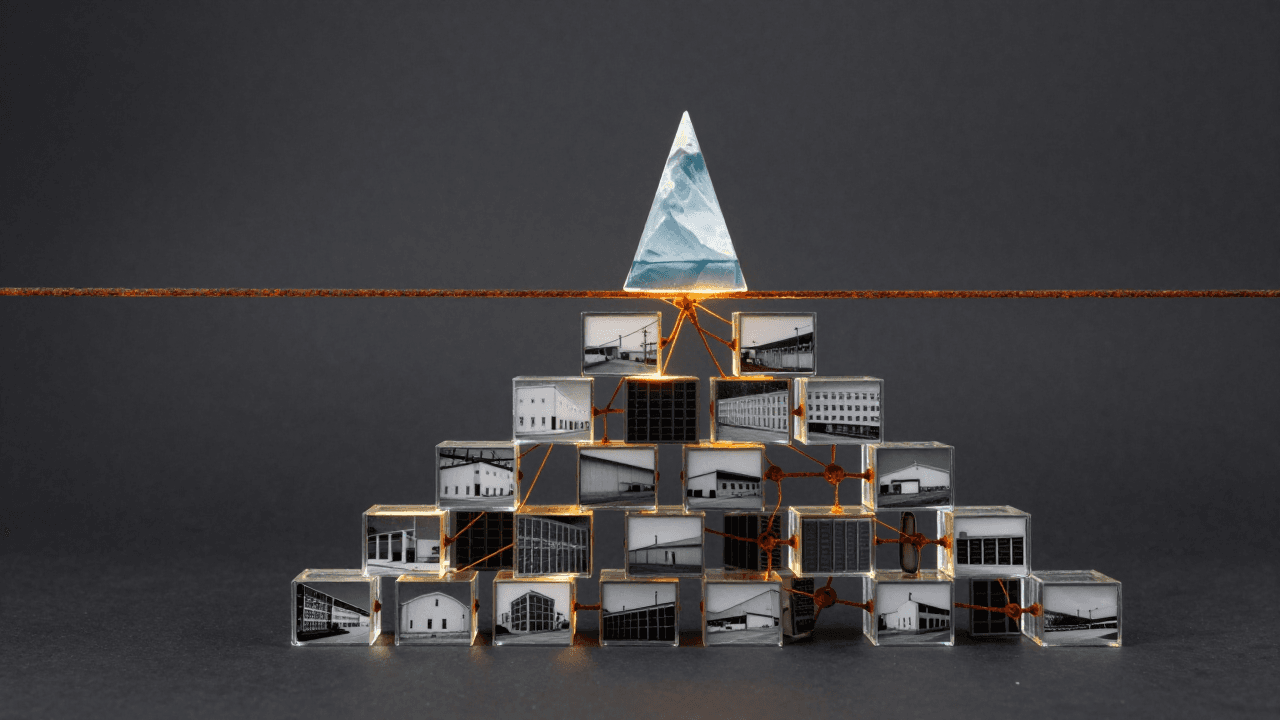
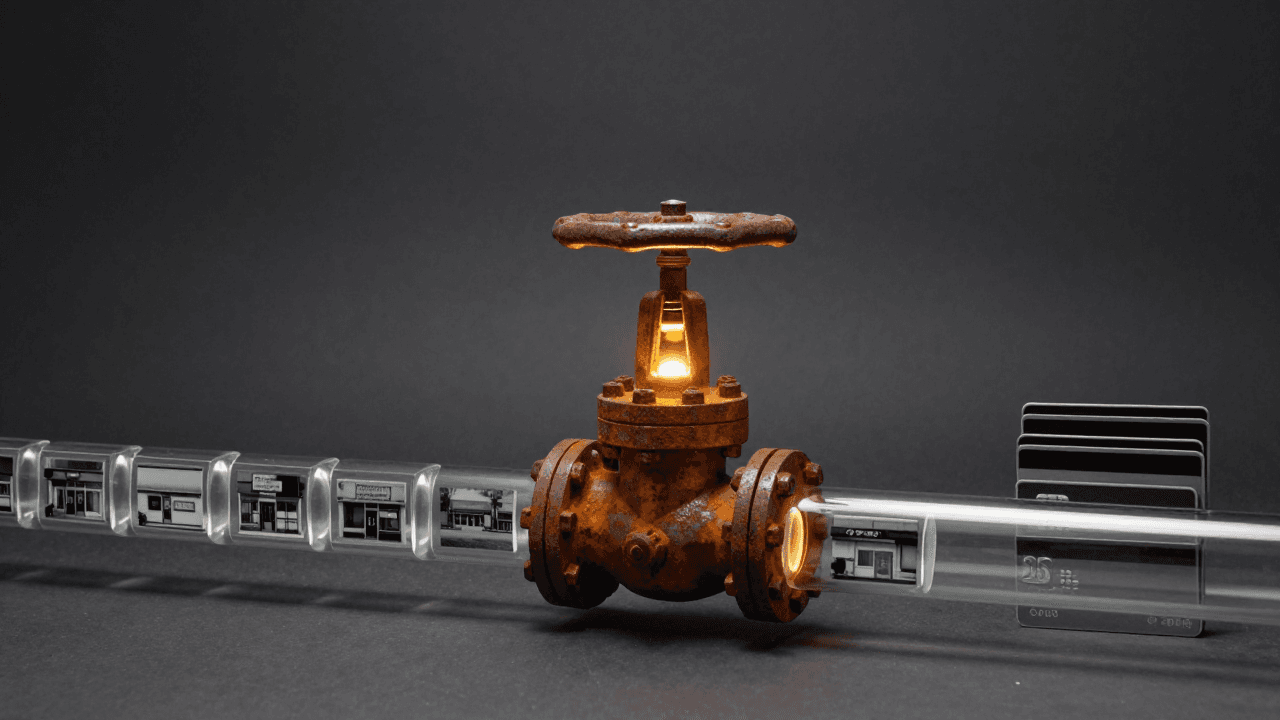
Four metaphors do most of the work.
Abstract ideas became the repeatable visual framework for episodes. The metaphor holds up across episodes, with the narrative open.
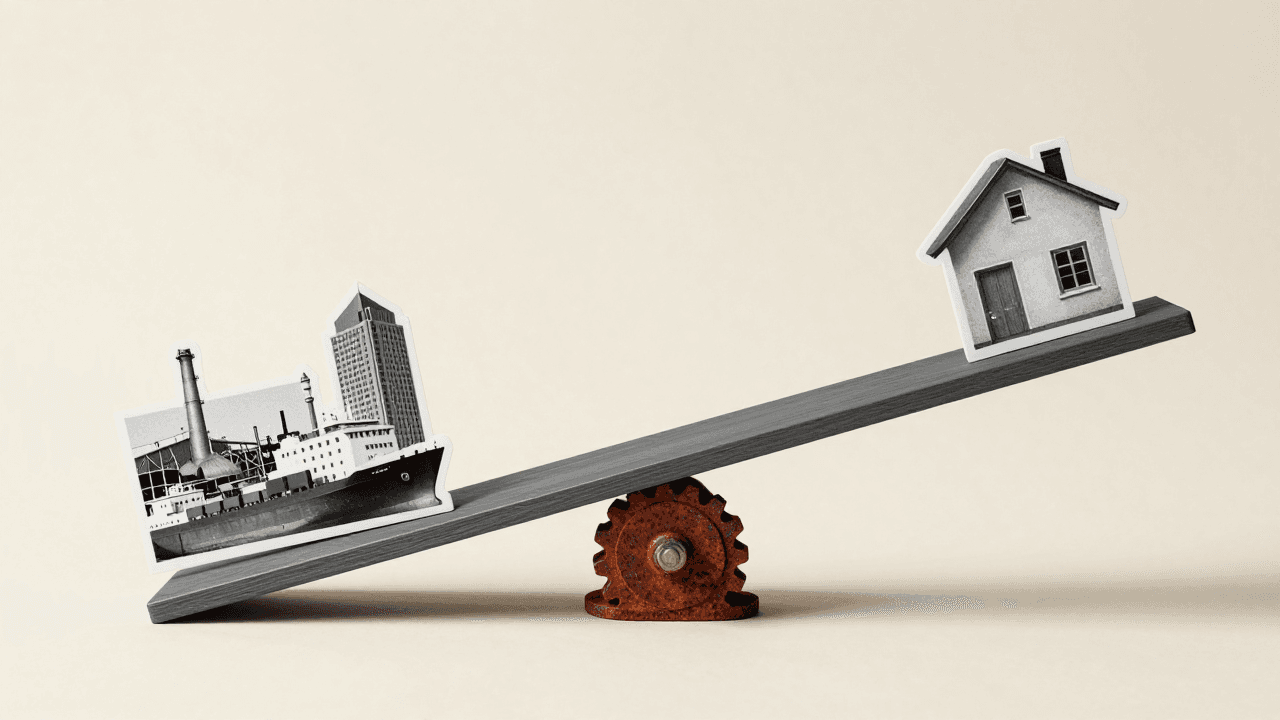
Seesaw
Balance tips as one element gains more impact.
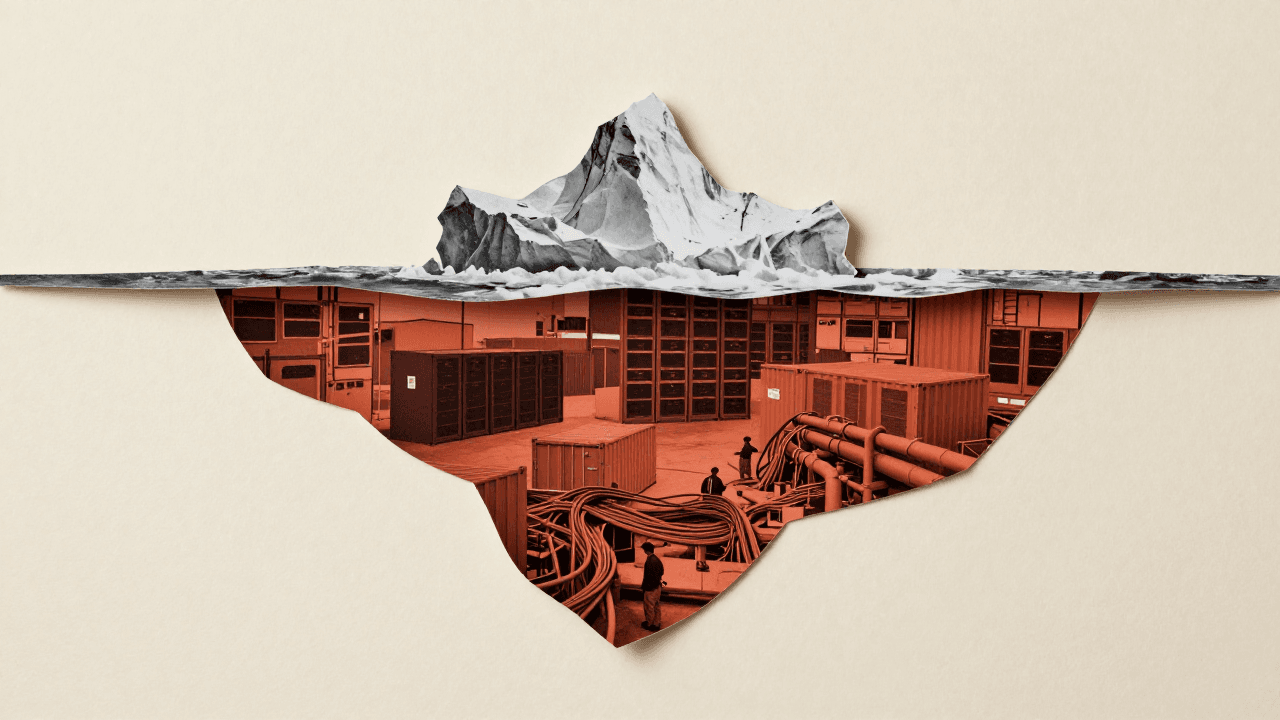
Iceberg
The concept on top hides layers underneath it.
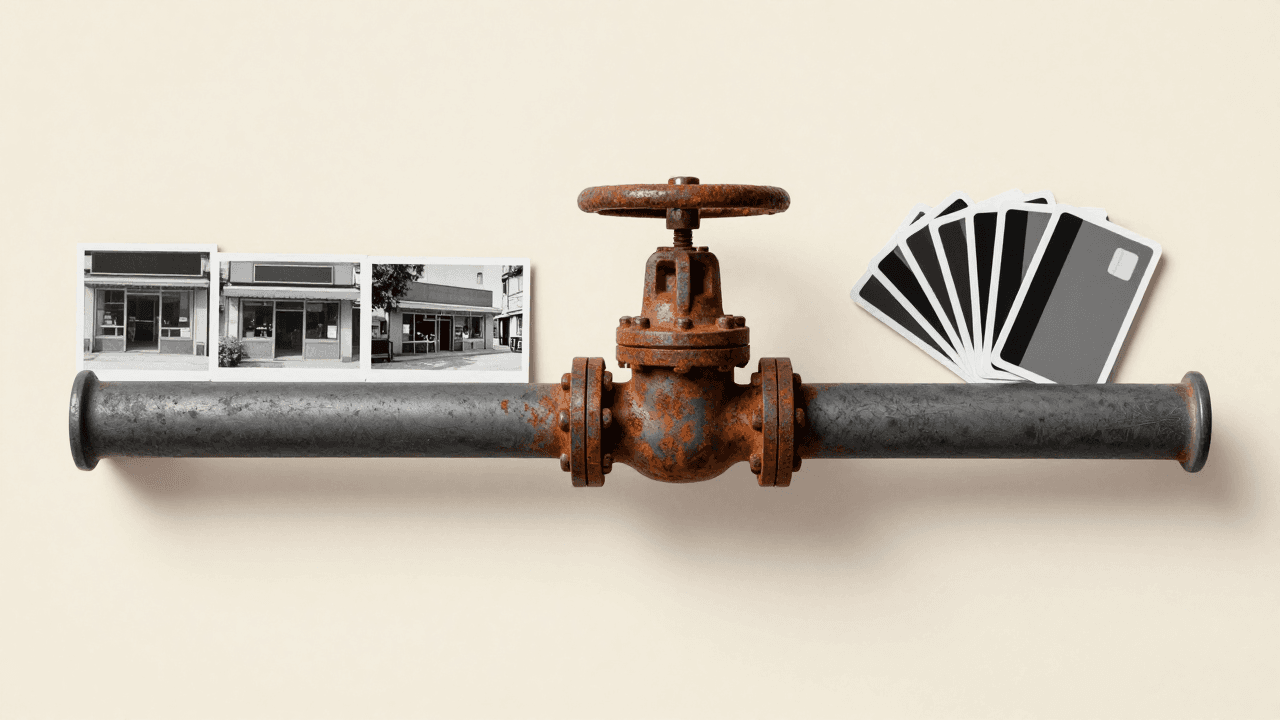
Valve
A chokepoint in the system.
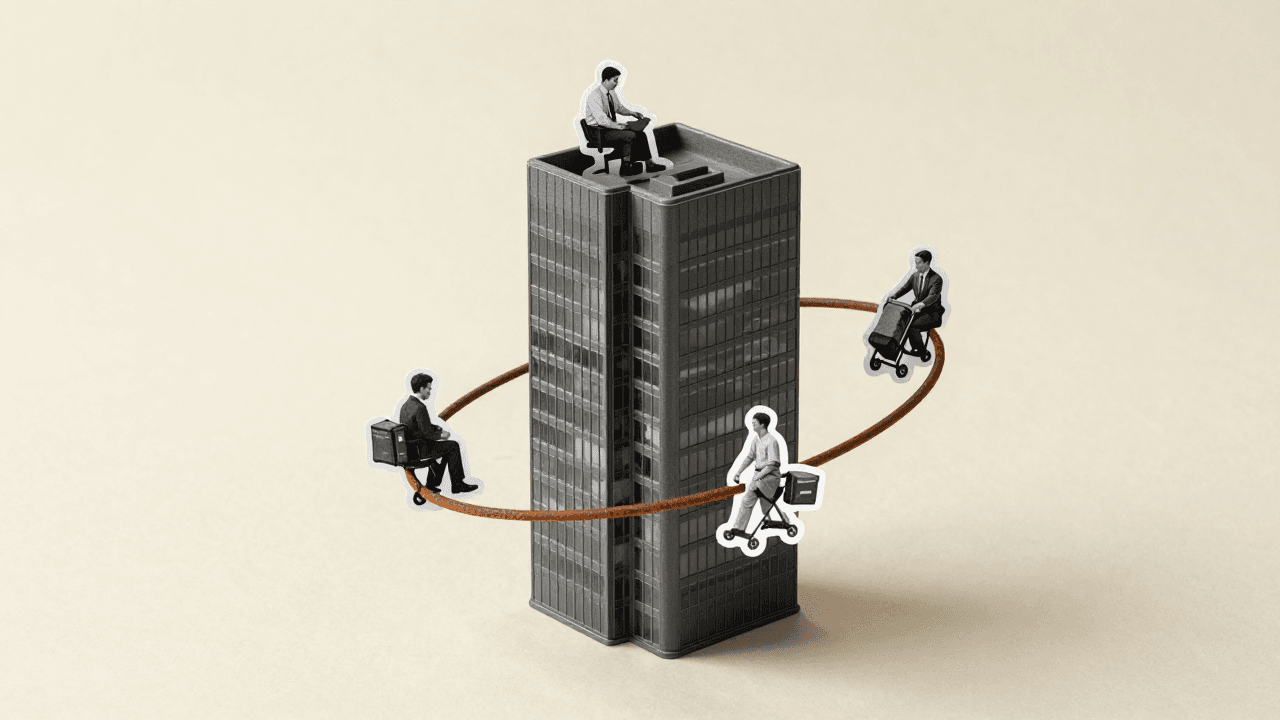
Gravity
A central element starts pulling outside pieces in.
Metaphor evolution.
Going straight at the metaphor with prompting didn't work. The model couldn't grasp what the image was supposed to say. So I worked backwards: a wireframe step first, then several agentic steps built on top of it, until the results came out consistent.
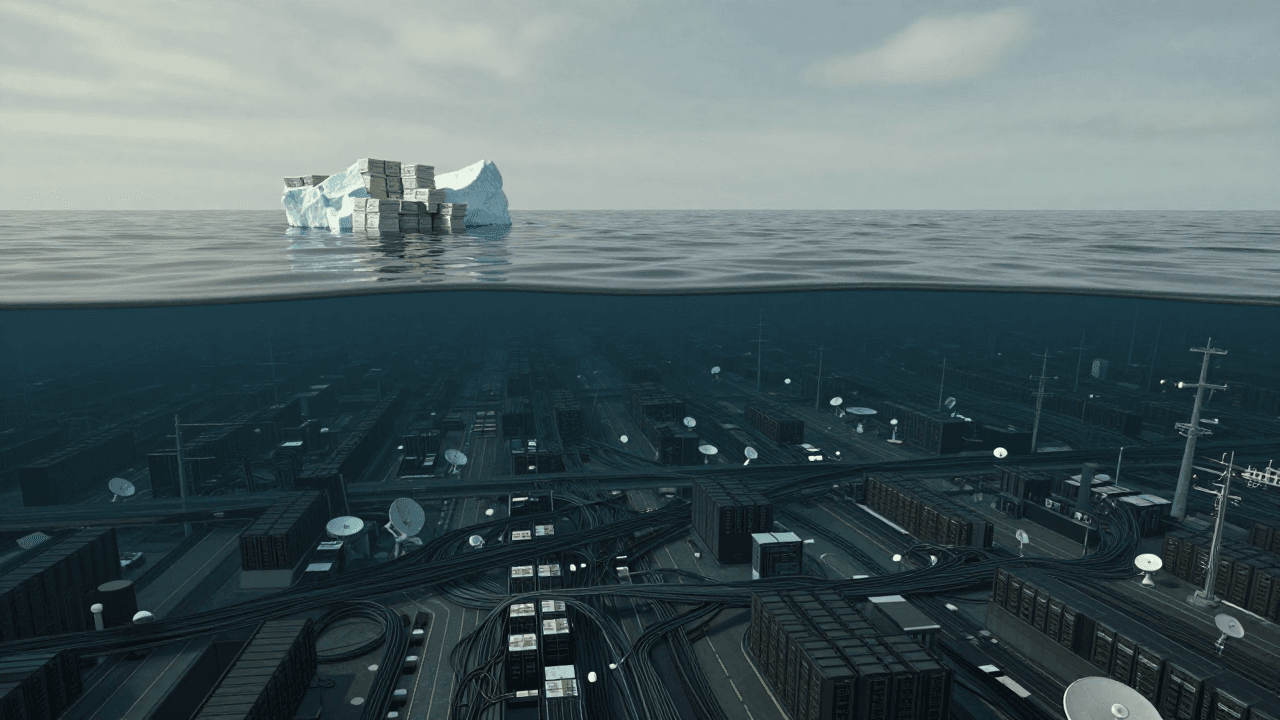 1
Initial pass at metaphor
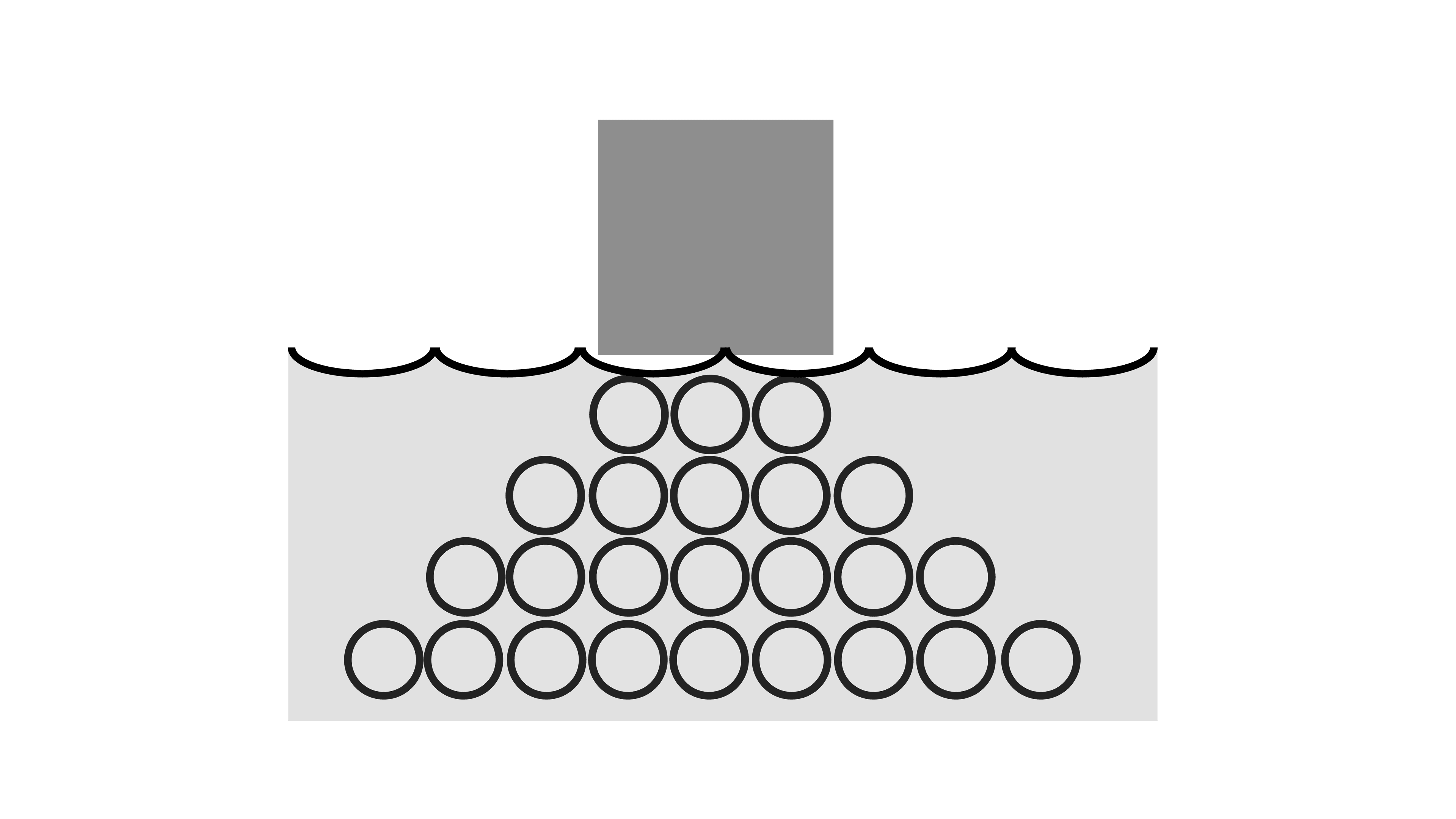 2
Wireframe.
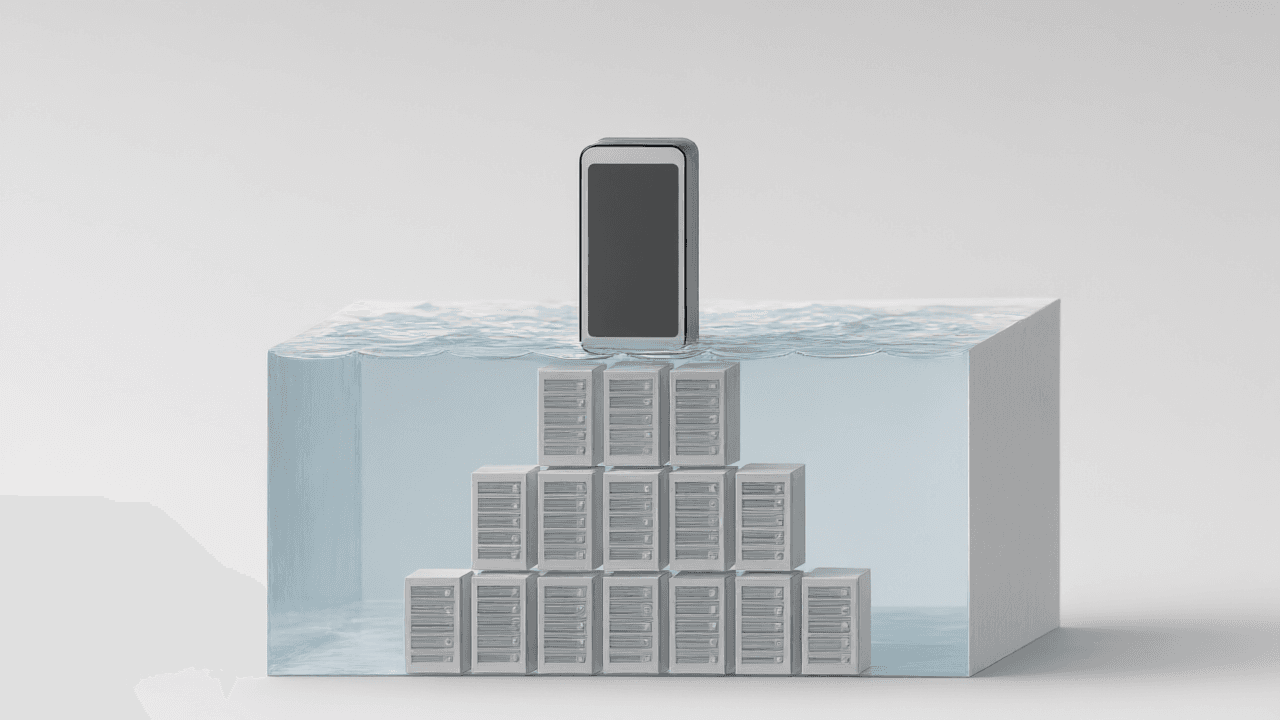 3
Layout held.
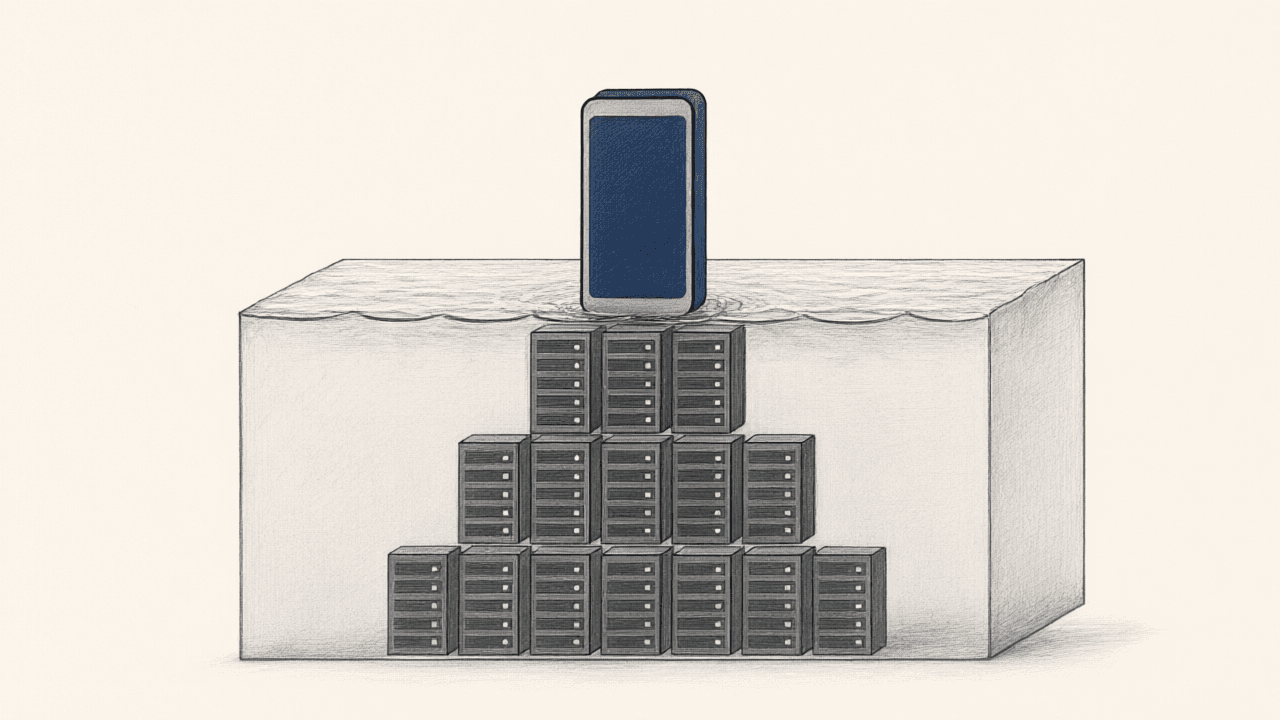
- 4
Style versioning with wireframe locked
Wireframe first.
Sketching the layout before any image or motion grounded everything. The model stops guessing where things go and just renders them. That's what made the metaphors repeatable.

Sample prompting rules.
- Describe the end and work backwards.
- Don't name what you don't want.
- Skip relative terms like “small” without relativizing them.
Fixed order, so someone else can pick it up and write one.
Styling.
Subject, seed and lighting stayed put.
Still to moving.
With wireframes and styles dialed in, motion was next. Each style needed its own approach: start and end frames for the collage, and a style mapped over a motion wireframe for the spheres.
Scoring
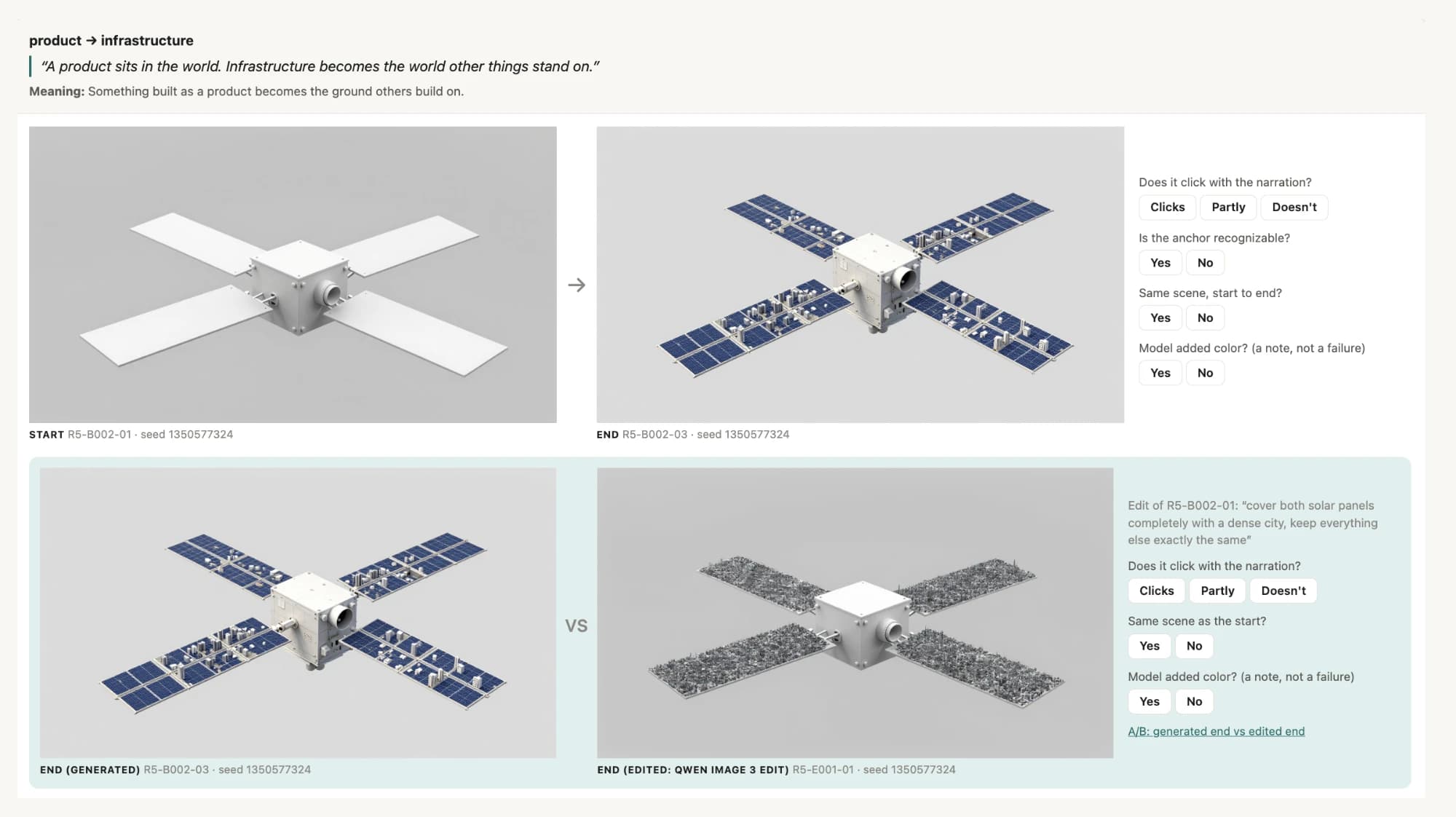
- Same seed, same prompt, pixel-identical image. So a change in the result means a change in the prompt.
- A/B picks whenever only one thing changed.
- Every batch priced before it ran. Stills cost a few cents each.
Where it's headed.
The look lives in its own file and nowhere else. Swap that one file and the same system makes a different show.